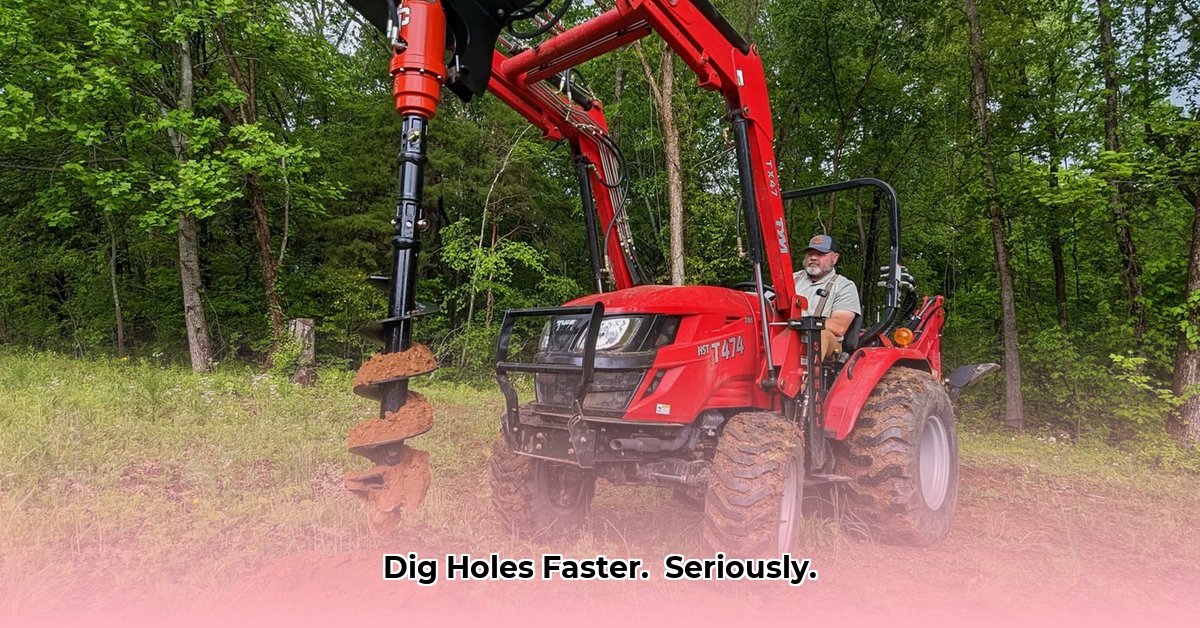
Choosing the right post hole digger is crucial for efficient and sustainable farming. This article compares hydraulic and PTO (Power Take-Off) post hole diggers, analyzing their performance, cost, and suitability for various farming operations. We'll provide a clear comparison to help you make an informed decision that optimizes your farm's productivity and long-term sustainability. For more information on tractor compatibility, see this helpful resource: Tractor Post Hole Diggers.
Hydraulic vs. PTO Post Hole Diggers: A Detailed Comparison
The choice between a hydraulic and a PTO post hole digger significantly impacts your farming efficiency. Hydraulic diggers, powered by your tractor's hydraulic system, offer superior power and control, while PTO diggers, directly driven by the tractor's PTO shaft, are generally more affordable but may lack power and versatility. Let's delve into the specifics.
Power and Performance: Digging Through the Differences
Hydraulic diggers provide consistent, high torque (rotational force), essential for navigating challenging soil conditions. They effortlessly handle dense clay soils, rocky patches, and compacted earth. For example, studies show that clay soils can require up to 20% more torque than sandy soil. A hydraulic digger maintains steady digging speed and precise hole depth in these demanding situations, while a PTO digger might struggle, stall, or even damage the auger. This translates to straighter holes, minimizing soil compaction and promoting healthier plant growth.
PTO diggers, on the other hand, rely entirely on the tractor's PTO horsepower. While less expensive initially, their performance can suffer in tough soils. They may struggle to maintain a consistent digging speed, resulting in uneven holes and potentially damaging the auger or even the tractor's PTO shaft. The power available is entirely dependent on the tractor itself. This limits their effectiveness in various soil types and makes them less versatile than their hydraulic counterparts.
Versatility and Maneuverability: Beyond the Hole
Hydraulic diggers frequently offer greater versatility. Many models can be mounted on a front-end loader or other attachments, enhancing visibility and maneuverability, particularly important in confined spaces or when working near existing structures. This adaptability extends their usefulness beyond post hole digging. A hydraulic digger’s ability to be utilized in more locations makes it a more robust investment over time.
PTO diggers, conversely, are typically fixed to the tractor's rear three-point hitch, limiting their maneuverability and restricting their use to areas easily accessible by the tractor. This inherent limitation reduces their overall utility and efficiency.
Safety and Durability: Protecting Your Investment and Yourself
Safety is paramount. Hydraulic diggers often incorporate safety features such as overload protection mechanisms that prevent damage to the auger or the digger itself if it hits a rock or other unexpected obstruction. These features not only protect your equipment but also minimize the risk of injury to the operator. The inherent "give" in the hydraulic system helps to protect both the operator and machine.
PTO diggers usually have fewer built-in safety mechanisms. The direct connection to the tractor's PTO means that any abrupt stops or obstructions are transmitted directly. This increases the risk of damage to the equipment and potential operator injury.
The Cost Factor: Upfront Investment vs. Long-Term Value
While hydraulic diggers have a higher initial purchase price, their robustness and efficiency often translate to lower long-term costs. Their superior digging power reduces the time and fuel needed per hole, and their durable construction reduces the likelihood of repairs and replacements. The long-term advantages can easily outweigh the higher initial investment, particularly for larger-scale operations or those working with challenging soil.
PTO diggers may be initially less expensive, but their greater potential for breakdowns and their reduced efficiency in tough soil conditions, which can lead to excessive fuel consumption and even damage to the tractor, could lead to higher costs in the long run.
Choosing the Right Digger: A Step-by-Step Guide
Assess Your Soil: Conduct a thorough soil test to determine compaction, rock content, and moisture levels. This information is crucial for determining the required digging power and the suitability of either system.
Analyze Your Budget: Compare the upfront costs of both types of diggers with their projected long-term costs, considering fuel consumption, maintenance, and potential repairs. Explore financing options if needed.
Evaluate Your Tractor's Capabilities: Ensure your tractor's PTO horsepower (for PTO diggers) or hydraulic capacity (for hydraulic diggers) meets the digger's power requirements. Overloading the tractor can lead to damage.
Estimate Digging Frequency: If you only need to dig a few holes annually, a PTO digger might suffice. For frequent and extensive digging, a hydraulic digger offers better efficiency and long-term value.
Prioritize Safety: Compare the safety features of different models and choose the option that best protects both your equipment and yourself.
Research and Compare: Explore different brands and models, reading reviews and gathering feedback from other farmers. Consider warranties and service plans, as well as ease of maintenance.
Test Drive (if possible): If a supplier allows it, testing both types on your own land provides invaluable practical knowledge.
Sustainable Farming Practices and Post Hole Diggers
Sustainable farming demands efficient resource use and minimizing environmental impact. Choosing the right post-hole digger contributes to both. Hydraulic diggers, while carrying a higher initial cost, offer superior digging speed and efficiency, reducing fuel consumption per hole. The reduced compaction from smoother operation also promotes healthier plant growth.
A well-chosen post-hole digger, whether hydraulic or PTO, is a long-term investment; proper maintenance is vital to prolonging its lifespan and optimizing its performance. Regular inspections, timely repairs, and appropriate storage are key to ensuring the sustainable use of this essential piece of farm equipment. By carefully considering the factors outlined above, you can make a decision that aligns with your farming operation's needs and promotes long-term sustainability.